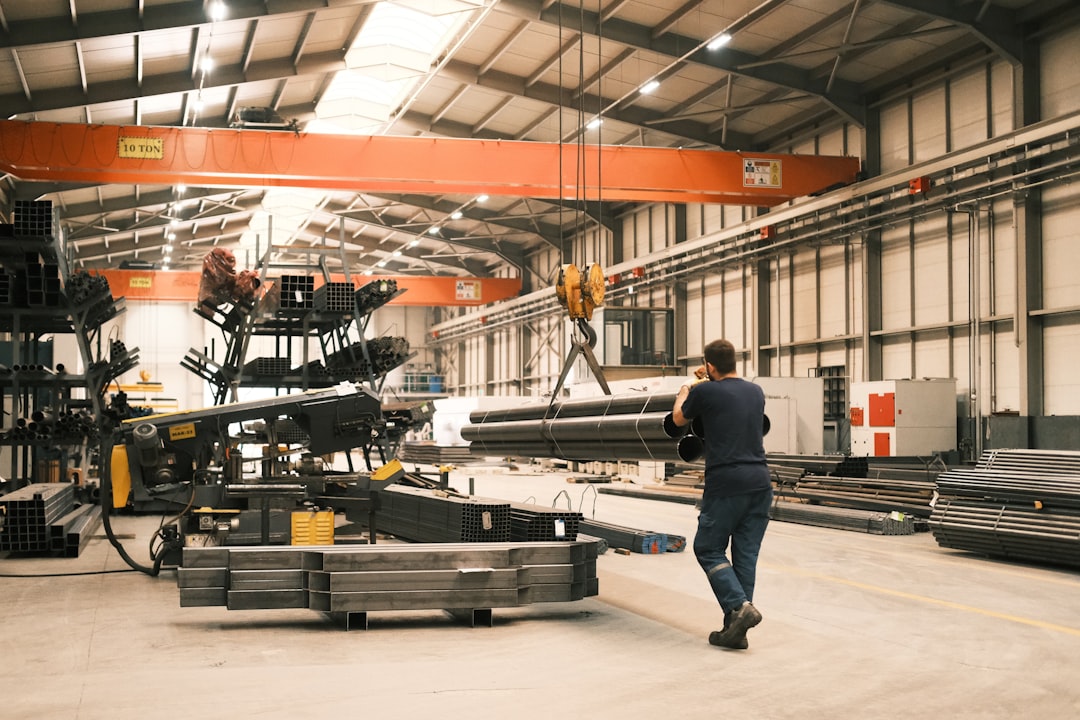
Thailand has become one of the region’s most practical destinations for companies that need dependable precision machine manufacturing, not only because of competitive production economics, but because of its mature supplier network, export experience, and steady technical capability. For businesses that depend on precision engineering for industries where tight tolerances, repeatability, and documented quality matter, the right manufacturing base can make a measurable difference in product performance and supply reliability. From automotive and electronics to packaging systems, food processing equipment, and general industrial machinery, buyers are not simply looking for a machine shop. They are looking for a partner that can interpret drawings accurately, control variation, communicate clearly, and support production over time.
Why Thailand stands out for precision engineering for industries
Thailand’s appeal in advanced manufacturing is rooted in balance. It offers established industrial zones, access to regional logistics, a workforce familiar with machining and fabrication, and a broad mix of suppliers ranging from agile custom shops to larger production-oriented manufacturers. That combination matters when a project requires more than one capability, such as CNC machining, finishing, assembly support, inspection, and delivery scheduling.
Another strength is flexibility. Many manufacturers in Thailand are comfortable handling both short-run and repeat production, which is valuable for companies moving from prototype to pilot run and then into stable volume. That progression often exposes weak suppliers. A shop may machine a good first sample, yet struggle with consistency once schedules tighten and quantities increase. The stronger Thai manufacturers understand that precision is not only about hitting a dimension once; it is about doing so repeatedly, under process control, with traceability and sensible lead-time management.
For international buyers, practical communication is equally important. A capable Thai manufacturer should be able to discuss tolerances, material selection, critical features, inspection methods, and packaging requirements in a direct, workable way. That operational clarity is often what separates a useful long-term partner from a vendor chosen only on price.
The best options for precision machine manufacturing in Thailand
There is no single best type of supplier for every project. The right option depends on the part geometry, material, production volume, downstream use, and the level of quality assurance required. In Thailand, the strongest choices usually fall into a few clear categories.
1. Full-service CNC machining partners
These suppliers are often the best choice for companies that need turned parts, milled components, and repeatable production under one roof. They tend to suit industrial buyers who want a broad capability set rather than a shop that specializes in only one process. A good full-service partner should be able to handle machining strategy, fixture planning, tolerance review, first-article inspection, and production scheduling without excessive hand-holding.
2. Tooling, fixture, and custom equipment specialists
Some projects are less about standalone parts and more about support for manufacturing systems: jigs, fixtures, molds, machine elements, and custom mechanisms. These specialists are especially useful when the challenge is functional performance inside a production environment. They often bring a stronger understanding of usability, maintenance, and fit within existing operations.
3. Prototype-to-production manufacturers
For product teams still refining specifications, a manufacturer that can support design changes, low-volume trial runs, and later production scale-up is often the smartest option. This reduces the disruption that comes from transferring work between multiple vendors. It also helps maintain process knowledge, which is critical when tolerances are tight and revisions are frequent.
4. Quality-led suppliers for demanding industrial applications
Where components must perform reliably in high-duty environments, buyers should prioritize suppliers with disciplined inspection routines, documented processes, and a culture of verification. In these cases, the best manufacturer may not be the cheapest quote on the table. It is the one most likely to reduce downstream problems such as fit issues, assembly delays, rework, or premature part failure.
- Choose a broad CNC partner when part variety and ongoing production support are the priority.
- Choose a tooling specialist when the project depends on function inside a manufacturing line.
- Choose a prototype-to-production supplier when designs are evolving and continuity matters.
- Choose a quality-led manufacturer when consistency, documentation, and inspection are non-negotiable.
How to compare Thai manufacturing partners with confidence
A polished presentation or a fast quotation does not automatically indicate real manufacturing strength. When comparing suppliers in Thailand, buyers should assess how each company manages risk, quality, and communication throughout the job, not just how quickly it can issue a price.
| Partner model | Best for | Strengths | Watch-outs |
|---|---|---|---|
| General job shop | Simple parts and urgent small batches | Speed, flexibility, lower setup barriers | Quality systems and repeatability may vary |
| Specialist precision manufacturer | Tight tolerances and critical components | Better process control, inspection, consistency | May be less suitable for highly mixed low-value work |
| Integrated manufacturing partner | Ongoing programs with revisions and scaling needs | Coordination across machining, QC, and delivery planning | Requires closer technical alignment at the start |
The most useful comparison often comes from asking structured questions early. A strong supplier should be able to answer without vagueness or sales-heavy language.
- How do they review drawings? Look for evidence that the team identifies critical dimensions, tolerance stacks, and unclear specifications before production begins.
- What is their inspection approach? Ask how first articles are checked, what in-process controls are used, and how nonconformities are handled.
- Can they work with your materials and finishes? Material behavior, hardness, and post-processing can change the difficulty of a job significantly.
- How do they manage repeat orders? Process documentation, setup control, and revision handling matter just as much as machine capacity.
- How clear is communication? A precise supplier should be able to discuss tolerances, feasibility, and lead times in a practical, technical way.
- What happens when a design changes? Responsive change management is essential for modern industrial production, especially during early-stage ramp-up.
These points matter because true precision machine manufacturing is a system, not a standalone machining event. The supplier’s discipline before and during production often determines whether a project remains stable after delivery.
Conclusion: choosing the right partner for precision engineering for industries
The best option for precision machine manufacturing in Thailand is rarely the supplier with the lowest initial quote. It is the manufacturer whose capabilities, quality methods, and communication style align with the technical demands of the part and the realities of your production schedule. Buyers should look for evidence of process control, not just machine availability; thoughtful engineering support, not just order taking; and consistent execution, not just a promising sample.
That is where a company such as AIR-QC | PRECISION MACHINE MANUFACTURER IN THAILAND becomes relevant within the broader market. For businesses seeking precision engineering for industries with careful inspection standards and a practical approach to long-term collaboration, this type of manufacturer can be a strong fit. The value lies in reducing avoidable errors, improving production confidence, and creating a more dependable path from drawing to finished component.
Thailand offers several credible routes for industrial buyers, from flexible machining shops to more structured precision manufacturers. The smartest decision comes from matching the supplier to the complexity of the work, the tolerance sensitivity of the component, and the level of quality assurance the application truly demands. When that match is right, precision engineering for industries becomes not just achievable, but reliably repeatable.
Find out more at
AIR-QC Co., Ltd
https://www.air-qc.co.th/
AIR-QC Co., Ltd. is a precision engineering and industrial machine manufacturing company based in Thailand that emphasizes Finnish engineering excellence in its approach and solutions.
